Replacing a cracked or sunken patio
We break out the old slab and look at what's under it, because a patio that sank usually sat on loose fill, and new concrete on the same dirt repeats the problem.
Old patio cracked, sinking or holding water by the back door? We pour a new slab on packed ground that sits flat and drains away.
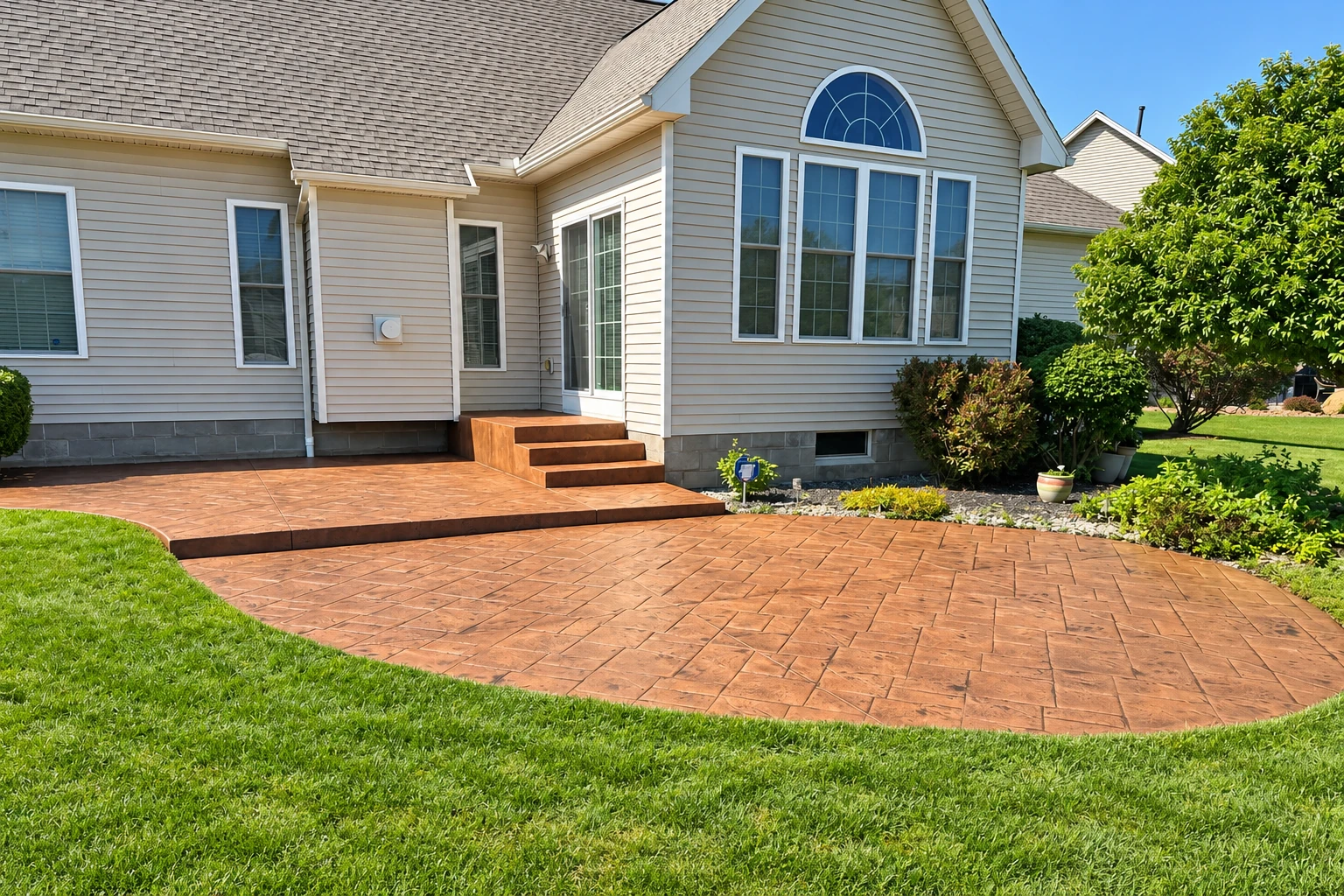
Concrete patio construction in Woodland is flatwork, the same family of flat slabs as walks and driveways. It gives you a level, solid place outside that sends rain and hose water away from your house instead of toward it.
Most people call us about a patio that's cracked, sunk at one corner or holding water by the door, or about a bare yard that's ready for a slab. The price moves with the size, whether there's an old slab to break out, how much digging and base work the ground needs, how close we can get the truck, and extras like a raised edge, a cover or a stamped pattern. The schedule turns mostly on the weather on pour day and the time the slab needs to cure afterward. If I'm not sure whether your patio needs a permit, I check with the city before I finalize the estimate, and I'll look at the job in person and put your price in writing.
I come out to see your yard and write the estimate, and I'm on site on pour days, so the person who priced your patio is there when the concrete arrives.
We dig out and pack the ground under the slab even when it adds cost, because that hidden layer is where most of the cracking and sinking I've seen begins.
California licenses concrete contractors for flat work like patios, and we're licensed and fully insured. We've been in business since 2013, and our own crew does the forming, pouring and finishing.
I start by looking at where your water runs today, because a patio has to fall away from the house. Then our crew digs out to firm soil and packs the subgrade, the ground the slab sits on, since a base that's only raked level tends to settle with the dirt and take the slab down with it. We set the forms and the rebar, steel bars that help hold the slab together if it does crack, then pour in the cooler part of the day and finish the top, often with a broom finish, a light brushed texture that keeps wet shoes from slipping. Control joints, shallow cuts that give the slab a straight line to crack along, go in on time so any cracks land where we chose. After that we keep the slab damp and covered, because drying too fast is hard on fresh concrete. The base is the part you'll never see, and it's the first thing people want to cut from the budget. I'd rather trim the finish than the base, because a plain slab on packed ground stays flat, and a fancy one on loose dirt usually doesn't.
A patio often ties into other flatwork around the house. If you'd like the surface pressed with a pattern that looks like stone or brick, our stamped concrete services can be planned into the same job. If you need a path out to the driveway or side gate, we can form a new concrete sidewalk at the same time so the heights and slopes line up. We're based in Woodland and work in the cities around it, from Davis and Winters to Roseville and Elk Grove, and if your city isn't named on the site, ask us anyway.
We break out the old slab and look at what's under it, because a patio that sank usually sat on loose fill, and new concrete on the same dirt repeats the problem.
We set the height to your door and slope the slab away from the house, so rain and hose water run out toward the yard instead of toward your foundation.
If a shade cover or patio lights are in your plans down the road, tell me at the estimate, so the layout is worked out before any concrete goes down.
Tight side yards, slopes and odd shapes are the jobs I enjoy working out, and I'd rather plan the forms and the drainage up front than guess on pour day.
Send the form and we'll reply within one business day to set up a visit. I'll come out, look at the spot and put your price in writing, free and with no obligation.
A rough length and width, even paced off in the yard, lets me plan the visit and talk through what the space will take before I measure it properly.
Tell me if the patio will sit up off the ground or get a cover, because either one can bring in a permit and changes how we plan the slab.
Your preferred timing helps us book a pour day that works around the weather and your plans, since a fresh slab can't be rushed through curing.
Example photos of slab shapes, brushed and stamped surfaces and walkway layouts you can point to when we talk through your own yard.
Straight answers to what Woodland homeowners ask about permits, cost, pour timing, curing and cracking before they build a concrete patio.
A patio more than 30 inches above the surrounding ground needs a building permit from Woodland's Building Division, and the city lists other flat concrete work, apart from driveways, as permit-free. Setback, lot coverage and height limits can still apply, so the city asks you to call 530-661-5820 before work starts. If yours needs a permit, we file it and schedule the inspections.
Yes, but the city lists overhead patio structures, patio enclosures and any electrical work among the items that need building permits and inspections. If a cover or lighting is in your plans, tell me at the estimate, because it's easier to plan the slab around it now than to work around a finished patio later.
A concrete patio in the Sacramento area usually costs about $6 to $18 per square foot installed, and that's the going rate in the area, not our price. Where yours lands depends on the things that move any patio's price, like tear-out, base work, access and extras. After I see the job, I'll give you our price in writing.
Early, since crews are advised to place and finish concrete outside the hottest hours when they can. Wind and sun count too, because a windy, sunny day calls for more care than a calm, humid one at the same temperature. Woodland allows construction from 7 a.m. Monday through Saturday and 9 a.m. on Sundays and holidays, and we set your start time when you book.
In hot weather, curing should start as soon as finishing ends and last at least 3 days, so the work keeps going after the truck leaves. Crews use wet burlap and plastic sheeting, a liquid curing compound or water to keep the slab from drying too fast. We keep yours damp and covered, and I'll tell you when it's ready to use.
It shouldn't, if the base is packed, the water runs away and the joints go in on time, though nobody can honestly promise concrete won't crack. Quick temperature swings, like a hot pour day followed by a cool night, can cause cracking too, which is another reason we time the pour and keep the slab covered. Our work is backed by our satisfaction guarantee.
We take calls seven days a week, early on weekends and until 9 PM, so call (530) 309-0224 or send the form whenever it suits you.