Setbacks from the property line
Woodland sets height, setback and material rules for home retaining walls, a setback being the distance from your property line, and those zoning rules can still apply when no building permit is needed.
Soil washing onto your patio or a slope you can't use? We plan the drain first, then build a concrete wall that holds the grade.
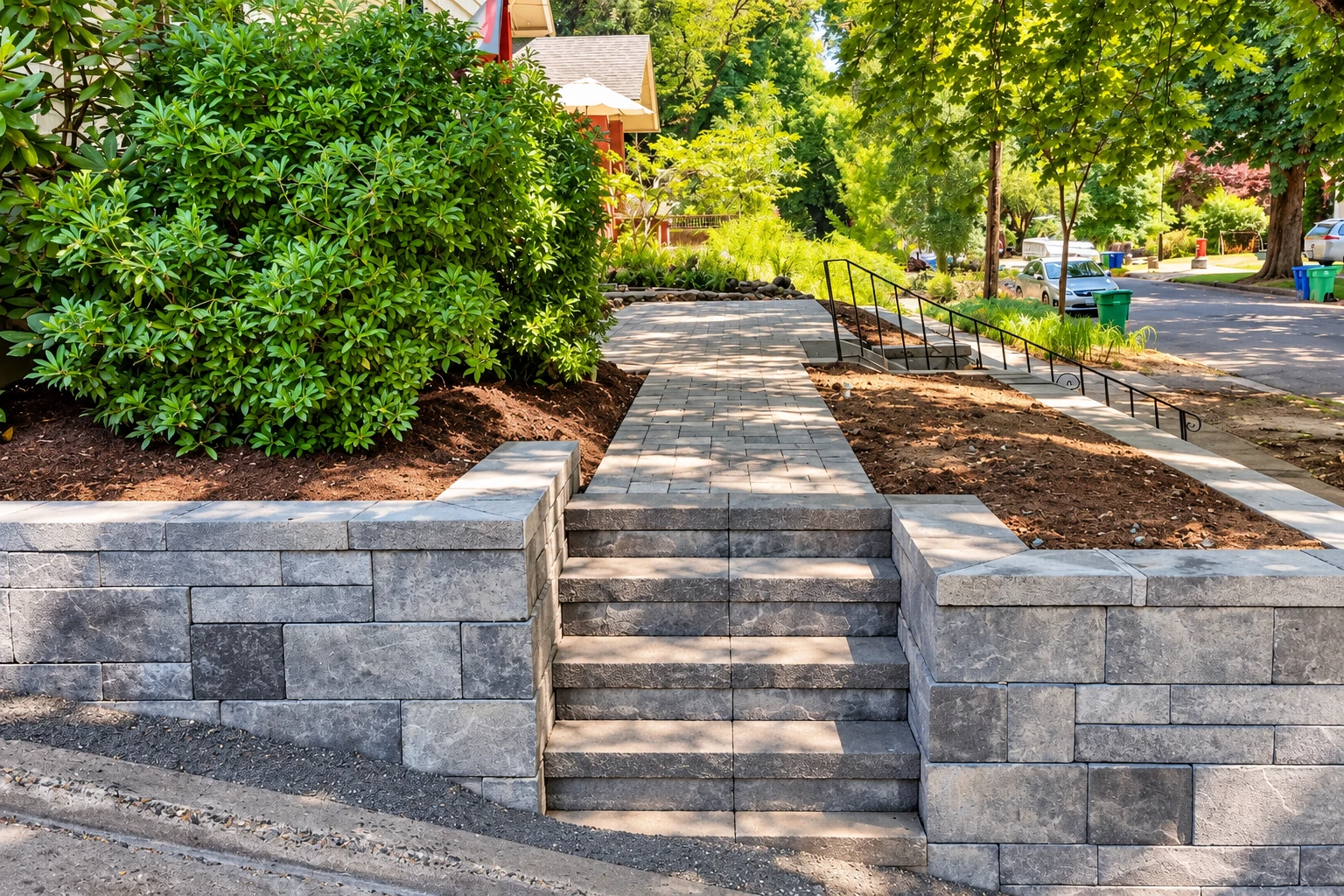
A concrete retaining wall holds back soil where your yard changes level, and here in Woodland we build them to turn a slumping slope into flat ground you can actually use.
Most people call us when dirt keeps washing onto a patio or walkway after a rain, or when a slope takes up half the backyard. The price moves mostly with the wall's height and length, how much digging it takes, how easily our crew and the truck can reach the spot, the drain it needs and whether a fence goes on top. The schedule turns on the permit if your wall needs one, the inspections, the weather and the curing time the concrete needs to harden, and when a permit is needed, we handle the application and schedule the inspections for you.
I walk the slope with you and ask a lot of questions before I price anything, and on pour days I'm on site while our own crew does the forming, pouring and finishing.
Since 2013 we've been known for the jobs other crews pass on, so a steep side yard or a wall that has to meet a slab just right is a puzzle I enjoy working out.
The state licensing board describes a concrete contractor as one who forms, pours, places and finishes concrete, the work we do, and we're licensed, fully insured and backed by our satisfaction guarantee.
I start by asking where the water goes on your lot right now, because most wall trouble I've seen starts with water trapped behind the wall. We plan the drain before anything else and pick one that can be cleared later, since weep holes, the small openings through the face that let water out, tend to clog over a wall's life, and a drain you can keep working is more reliable. Before we dig, we have Underground Service Alert mark any buried lines, which is the 811 call the city asks for before any digging. Then our crew digs out, sets the forms, pours and finishes the wall, puts the drain in place and backfills behind it, and I'm there on pour day to make sure it goes the way we planned.
A wall is often the first half of a bigger job, because the flat ground it creates usually gets used for something. We can follow it with concrete pool decks or a slab through our concrete floor installation work, and planning both together lets us decide early where the water off that slab will go. We're based in Woodland and build in the cities around it, from Davis and Winters to Roseville and Elk Grove, so ask us even if your city isn't named on the site.
Woodland sets height, setback and material rules for home retaining walls, a setback being the distance from your property line, and those zoning rules can still apply when no building permit is needed.
Where a 6-foot fence is allowed, the city's director may allow a fence on a retaining wall up to 8 feet combined, measured from the wall's mid-point to the fence top, so plan both together.
Woodland sits in Seismic Category D, a rating used when designing for earthquakes, so it's fair to ask how any wall plan accounts for it before the digging starts.
The city asks owners to get in touch before any construction work so all its rules are met, and if we're not sure what applies to your wall, we check before your estimate is final.
Send the form and we'll reply within one business day to set a time. I'll come out to look at the slope myself and put the price in writing, free and with no obligation.
Tell us roughly how tall the wall needs to be, because height drives the price and decides which of the city's permit rules your wall falls under.
A rough measurement to the property line, a fence or the house helps us check the city's setback rules before I come out, so there are fewer surprises later.
Shots from the top and bottom of the slope show us where water runs now, and that's where I start when I plan the drain for your wall.
These example photos show wall faces, heights and how a wall can sit beside a patio or pool deck, as ideas to talk through for your yard.
These are the questions people ask most when they're planning a concrete retaining wall in Woodland, answered plainly.
Poured concrete retaining walls in the Sacramento area usually cost about $45 to $48 per square foot. That's the going rate around here, not our price, and the only way to know yours is to measure the wall you actually need. I'll come out, look at the slope and put your price in writing at no cost.
A wall 36 inches or taller needs a building permit under the city's fence handout. A separate city page, which carries no date, exempts walls under three feet high and three feet from the property line or other structures. Check the current rule with the city's Building Division, and if your wall needs a permit, we'll handle the application.
Poor drainage is by far the most common reason retaining walls perform badly. Water that can't get out from behind the wall keeps pressing on it, and if nobody deals with it, those problems can go as far as outright failure. That's why the drain is the first thing we plan.
Yes, the city lets you pull a permit for your own house and draw the plans, as long as they show the wall meets structural and life safety code. You carry that responsibility, though, and the city recommends a qualified professional in most cases. If you'd rather hand it off, I'm glad to come take a look.
Ask for proof of license, bond, workers' comp and liability insurance before any work starts. The city notes that licensed contractors must be bonded and carry their own workers' comp and liability coverage. We're licensed and fully insured, and I'm happy to walk you through how we'd build your wall.
Call (530) 309-0224 or email sales@concretewoodland.com, and I'll come out to see the slope, which tells me more than any photo.