Backyard patios
A stamped patio gives you an outdoor room that looks like stone or brick, and we size and shape it around how you'll actually use it, from a dining table to a grill corner.
Plain gray patio or bare dirt out back? We pour, stamp and seal a patterned surface on a packed base, sloped to drain.
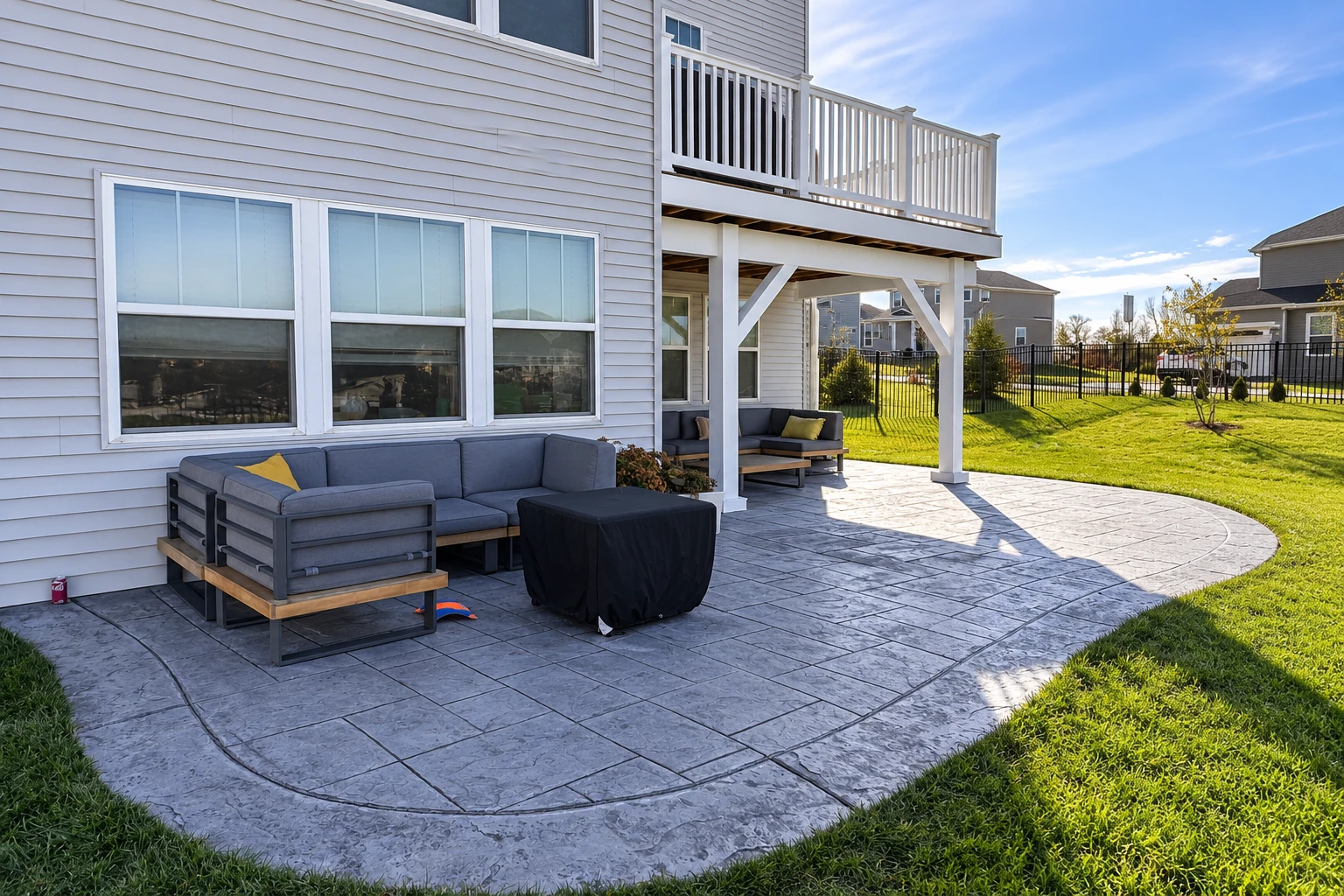
Stamped concrete in Woodland is a poured slab, usually a patio, walk or driveway, that we press with a stone or brick pattern while it's still wet and seal once it has cured. You get a decorative surface with the strength of regular concrete, and the sealer deepens the color and helps it shed water and stains.
Most calls about stamped concrete start with a plain gray patio that looks tired, a cracked walk, or a bare yard that needs more than a basic slab. The price mostly turns on the size of the area, whether it's a patio or a driveway that has to carry a car, whether an old slab comes out first, how much digging and base work the ground needs, and the pattern and sealer you choose. The schedule turns on the weather, the cure before sealing and any permit the job needs. I come out, look at it in person and put the price in writing, so you're working from your own number.
I walk the area with you, ask how you'll use it and put the price in writing, so the person pricing your job is the one who answers for it later.
Our crew does the forming, pouring and finishing, and I'm on site on pour days, because stamping has a short window and someone has to call the timing.
We're licensed and fully insured, and the state license board counts forming, pouring and finishing flat concrete as a concrete contractor's job. We've been in business since 2013.
I start by walking the area with you and checking where the water runs, because a slab that tips toward the house is a problem no pattern can hide. Then we dig out to firm soil and pack the subgrade, the ground the slab sits on, instead of just raking it level, set forms that slope away from the house, and lay rebar, steel bars that hold the slab together, where the job calls for it. Before the pour, we talk through the sealer and how the finished surface will look, so nothing surprises you later. We pour early in the day rather than in the midday heat, which can leave a weak, dusty top, press the pattern while the concrete is still soft, and cut control joints, planned lines that give the slab a place to crack. Then we let it cure, the wait while the concrete hardens, before the sealer goes on, and that wait moves with the temperature, humidity, mix and curing method. If the budget gets tight, I'd rather trim the pattern or skip a border than skimp on the base, because the base is buried on day one and it's what decides whether your pattern stays flat.
Stamped work usually connects to plainer concrete around it. A stamped patio often needs a path to reach it, which is where our concrete sidewalk building comes in, and a stamped driveway runs right up to the garage, so if that slab is worn out too, we can pour new garage floor concrete and set the two at heights that meet cleanly.
A stamped patio gives you an outdoor room that looks like stone or brick, and we size and shape it around how you'll actually use it, from a dining table to a grill corner.
A stamped driveway carries the weight of a car every day, so it gets a heavier build than a patio, with a deeper packed base and steel inside the slab.
A stamped border along a plain walk or driveway adds pattern without paying to stamp the whole area, which is a common way to get the look and stay in budget.
A stamped landing at the front door is a small area that changes how the whole house looks, and it's where we pay close attention to how the slab meets the house and steps.
Send the form and we'll reply within one business day to set a time. I'll come out, look at the area and put the price in writing, free and with no obligation.
Let us know whether it's a patio, walk or driveway and roughly how big it is, because a slab that carries a car gets built differently from a backyard patio.
Phone photos of the area, the slope and where water goes when it rains help me arrive with the right questions, and you can email them to sales@concretewoodland.com.
We're based in Woodland and work in the cities around it, from Davis and Winters to Roseville and Elk Grove. If your city isn't named on the site, ask us anyway.
Example patterns, borders and sealed finishes on patios, walks and driveways, so you can point at what you like when I come out.
Straight answers on cost, permits, cracking, sealers and upkeep, the things most Woodland homeowners ask before they book a stamped job.
A stamped concrete patio in the Sacramento area usually costs about $9 to $18 per square foot, and that's the going market rate, not our quote. Steel-reinforced concrete costs more per square foot than unreinforced, so how the slab is built matters as much as the pattern. I'll look at your job and put your own price in writing.
A stamped patio counts as flat concrete work, which the city of Woodland lists as needing no building permit, but a stamped driveway does need one. Work in the public right-of-way at the street also needs an encroachment permit, with one to three weeks for review. Zoning limits like setbacks can still apply. When a permit's needed, we handle the application and schedule the inspections.
No concrete can be kept from cracking entirely, but properly laid-out control joints keep the cracks controlled and small. On stamped work I like to hide those joints in the pattern so they read as part of the design. Ask us, or anyone you're comparing, to show you the joint layout before work starts.
Most stamped concrete gets a topical sealer, one that leaves a thin film on top, because it deepens the color, while most penetrating sealers soak in and give no color boost. Industry guidance warns that too much topical sealer, or sealing too early, can spoil its look, so the amount and the timing matter as much as the product.
Reseal when the surface shows it needs it, not on a set number of years. The signs are water and stains soaking in instead of beading up, and the color losing its depth. Resealing is the most common upkeep stamped concrete needs, and before we leave I'll point out what to watch for on your slab.
A well-built stamped slab shouldn't be, since industry guidance says outdoor slabs need a texture that isn't slippery when wet and a slope that drains water off. A smooth pattern under a heavy, glossy coat can still get slick, so ask how the finish will feel wet and where the water goes before you choose.
Call (530) 309-0224 or use the form so we can work out slope, drainage and joints before a truck is ever scheduled.